Best USB Microphones for Podcasting and Streaming in 2026
Upgrade your audio game without the hassle of audio interfaces. We review the top plug-and-play USB microphones for creators, streamers, and podcasters.
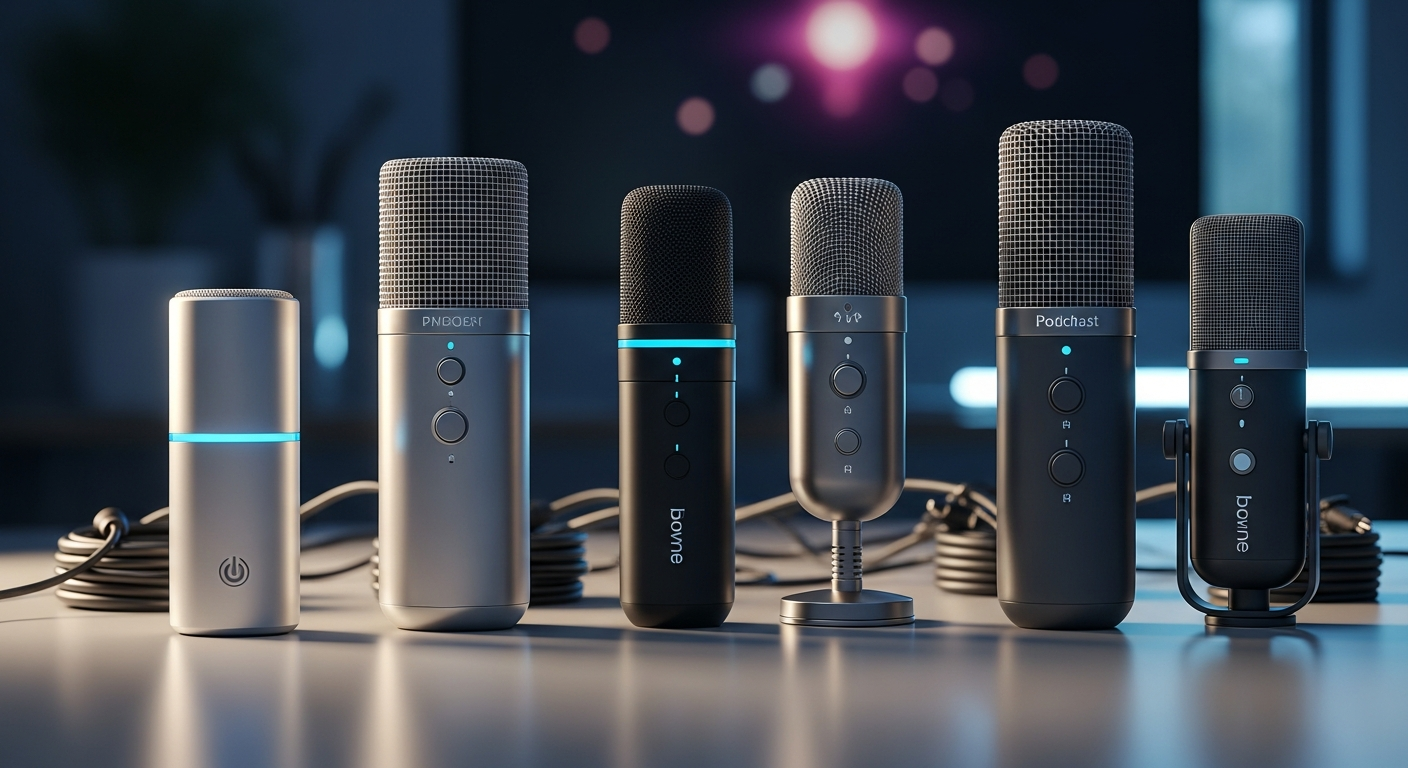
When it comes to creating content, whether you're streaming on Twitch, recording a new podcast episode, or simply trying to sound professional on Zoom calls, audio quality is arguably more important than video. If your video feed drops to 720p, people will keep watching; if your audio is scratchy, echoing, or full of background noise, they will leave immediately.
While XLR microphones remain the industry standard for professional studios, the gap has closed dramatically. In 2026, USB microphones offer an incredible mix of studio-quality sound, software-powered noise rejection, and ultimate plug-and-play convenience. No expensive audio interface required—just plug directly into your PC or Mac.
We tested the best USB microphones on the market to find out which ones deliver the best value, durability, and vocal presence for your content creation journey.
1. Shure MV7+: The Undisputed King of USB Audio
Best Overall USB MicrophoneThe original Shure MV7 was a legend, bridging the gap between the iconic SM7B (the podcasting industry standard) and the everyday creator. In 2026, the MV7+ takes that crown and adds a customizable LED touch panel, improved DSP (Digital Signal Processing) for real-time denoiser, and an upgraded auto-level mode.
Like its predecessor, the MV7+ is a dynamic microphone. This is crucial if you record in an untreated room (like a bedroom or standard home office). Dynamic mics naturally reject background noise, keyboard clicks, and room echo far better than condenser microphones.
Pros:
- Incredible background noise rejection.
- Dual USB-C and XLR outputs (future-proof if you ever upgrade your setup).
- MOTIV Mix desktop app offers top-tier EQ and compressor control.
- Beautiful, customizable LED mute panel.
- Premium price tag.
- Requires you to stay relatively close to the mic for the best low-end response (the "radio voice" effect).
2. Rode NT-USB+: Studio-Grade Condenser Warmth
Best for Musicians and Voiceover WorkWhile dynamic mics are great for rejecting noise, condenser microphones like the Rode NT-USB+ are loved for their wide frequency response, capturing every nuance and breath of a performance. If you are recording acoustic guitar, singing, or have a quiet, treated space for voiceovers, the NT-USB+ is phenomenal.
Rode took their classic design and upgraded it with an internal Revolution Preamp and APHEX audio processing via their Rode Connect software. The result is an incredibly hot, clear signal straight over USB-C.
Pros:
- Pristine, broadcast-quality condenser sound.
- Comes with a high-quality pop filter and desk stand out of the box.
- Excellent onboard DSP via Rode Connect software.
- Very sensitive, capturing natural vocal timbres perfectly.
- Condenser design means it will pick up your mechanical keyboard and room echo if your space isn't treated.
- The included desk stand is a bit flimsy compared to a proper boom arm.
3. Logitech G Yeti GX: The Gamer's Dream
Best for Streaming and GamingBlue Microphones is now fully integrated into Logitech G, and the Yeti GX is a massive departure from the chunky, retro Yeti of the past. The Yeti GX is a sleek, modern, supercardioid dynamic microphone designed explicitly for gamers and live streamers.
It uses a dynamic capsule but is tuned to sound bright and energetic. The supercardioid polar pattern is extremely focused, ensuring it only picks up what's right in front of it (your voice) and completely ignores your monitor speakers and aggressive mouse clicks. It integrates seamlessly into Logitech G Hub, where you can sync its RGB ring with your other peripherals.
Pros:
- Excellent rejection of keyboard and mouse noises.
- Built-in scroll wheel for gain control with visual LED clipping indicators.
- Smart Audio Lock feature automatically prevents clipping if you yell during a stream.
- Sleek, modern aesthetic that looks great on camera.
- Software reliance: You need G Hub to get the absolute most out of it.
- Lack of XLR output limits future studio expansion.
4. DJI Mic Mini: The Ultimate On-The-Go Solution
Best for Mobile Creators and VloggingWhile not a traditional desktop USB mic, the DJI Mic Mini earns a spot on this list because of how content creation has evolved. Not everyone sits at a desk. If you do IRL streaming, TikToks, or YouTube shorts on the move, a bulky desk mic won't help you.
The DJI Mic Mini can plug directly into your laptop or phone via USB-C, acting as a wireless audio interface. You clip the tiny transmitter to your shirt, and you get incredibly crisp, isolated vocal audio anywhere you walk.
Pros:
- Ultimate portability and wireless freedom.
- Plugs directly into phones and laptops via USB-C.
- Surprisingly rich audio for a micro-lavalier system.
- Extremely affordable.
- Doesn't have the rich "radio" low-end of a large-diaphragm desk mic.
- Battery management is required (though it charges fast).
Feature Comparison Table
| Microphone | Mic Type | Polar Pattern | Connection | Best For | Price |
|---|---|---|---|---|---|
| Shure MV7+ | Dynamic | Cardioid | USB-C / XLR | Podcasting, untreated rooms | $279 |
| Rode NT-USB+ | Condenser | Cardioid | USB-C | Vocals, music, voiceover | $169 |
| Logitech Yeti GX | Dynamic | Supercardioid | USB-C | Streaming, gaming | $149 |
| DJI Mic Mini | Wireless | Omnidirectional | USB-C / Wireless | Mobile, IRL streaming, TikTok | $89 |
Buying Guide: Dynamic vs. Condenser
The biggest decision you'll make when buying a USB microphone is choosing between a dynamic and a condenser capsule.
Condenser Microphones (like the Rode NT-USB+) are highly sensitive. They require phantom power (provided via USB) and capture a very wide frequency range. They sound natural, detailed, and crisp. The Catch: They hear everything. The dog barking next door, the AC turning on, your loud mechanical keyboard. You need a quiet room.
Dynamic Microphones (like the Shure MV7+ and Yeti GX) are less sensitive. They use electromagnetism to translate sound waves and require a stronger sound source (your voice right up close). The Catch: You must practice good mic technique and stay about 3-5 inches away from the grill. The massive benefit is that they naturally reject background noise, making them ideal for the average untreated bedroom or office.
Our Final Verdict
For 90% of podcasters and creators in 2026, the Shure MV7+ is the clear winner. The hybrid USB/XLR capability means it grows with you, and its dynamic noise rejection is basically a cheat code for getting professional audio in a less-than-ideal acoustic environment.
If you are on a tighter budget and primarily stream video games, the Logitech G Yeti GX offers incredible value, great noise rejection, and smart features that prevent your audio from clipping when things get intense.
Ready to buy?
Here are our recommended picks from this review: