The Best 3D Printers for Home, Workshop, and Beginners in 2026
From budget-friendly FDM machines to ultra-fast CoreXY workhorses, these are the absolute best 3D printers for your 2026 creative projects.
Quick Buy Links
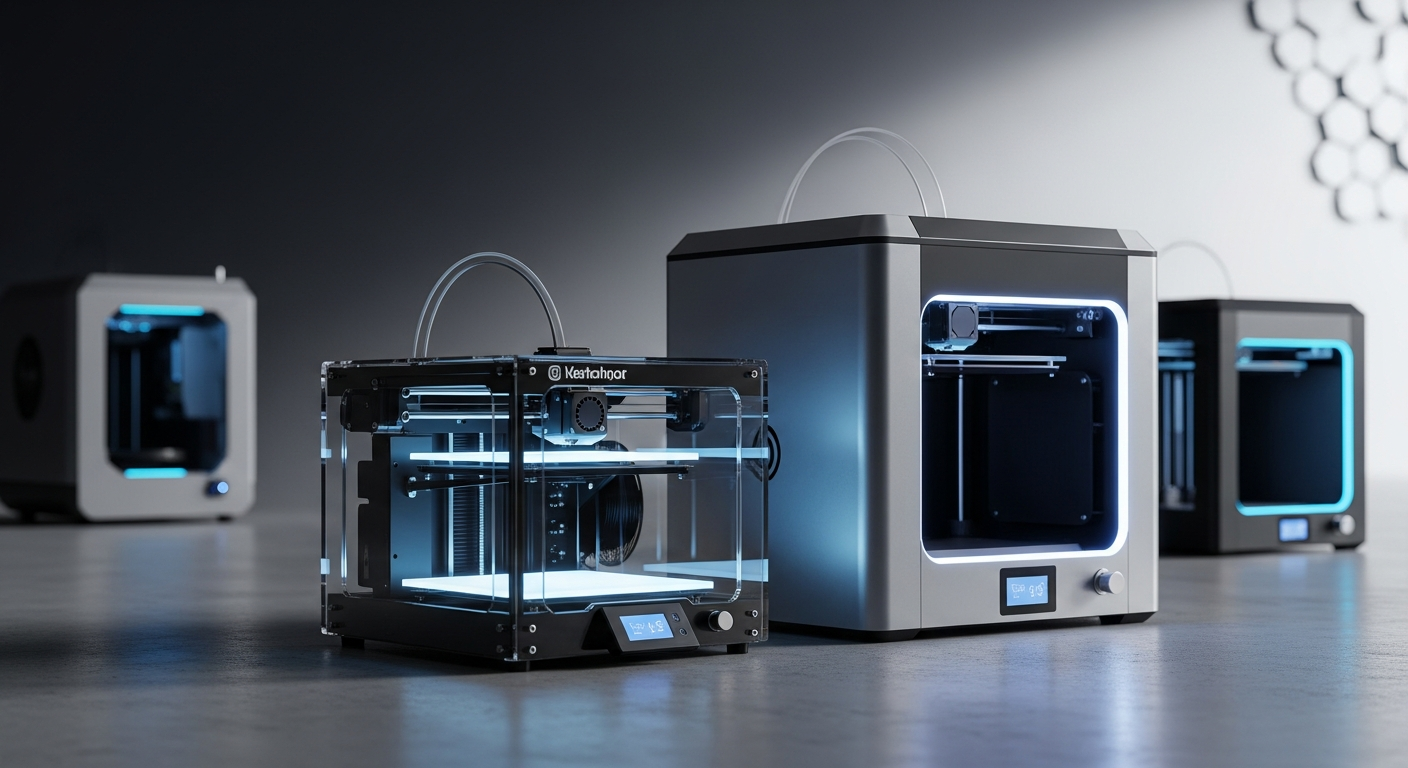
The world of 3D printing has completely transformed. Just a few years ago, buying a 3D printer meant accepting a hobby of constant tinkering, leveling, and troubleshooting. Fast forward to 2026, and the landscape is dominated by high-speed, "plug-and-play" machines that just work.
Whether you are looking to start a small print farm business, prototype mechanical parts, or just print cool tabletop miniatures, there is a printer perfectly suited for your needs. We've vetted the market, sifted through the hype, and tested the top contenders to bring you the best 3D printers of 2026.
1. Bambu Lab P1S: The Best All-Around 3D Printer
Best for: Most users looking for speed, reliability, and multi-color capability.
If there is one printer that defines the current era of consumer 3D printing, it is the Bambu Lab P1S. Building on the massive success of their flagship X1 Carbon, Bambu Lab has packed all the essential features into a much more affordable enclosed machine. It prints fast (up to 500mm/s), requires practically zero assembly, and auto-levels the bed perfectly every single time.
What really sets the P1S apart is the ecosystem. When paired with the AMS (Automatic Material System), you get flawless multi-color printing. The enclosed design also means you can easily print high-temperature materials like ABS and ASA without worrying about drafts causing warping.
Pros:
- Incredibly fast and reliable printing out of the box
- Fully enclosed for advanced materials
- Seamless multi-color capability with optional AMS upgrade
- Excellent slicer software and mobile app integration
- Louder than traditional "bed slinger" printers
- Ecosystem is somewhat closed compared to open-source alternatives
2. Creality K1C: The Reliable Workhorse
Best for: Budget-conscious users who still want CoreXY speed and carbon fiber capabilities.
Creality has long been the king of budget printers with their Ender series, but the K1C is a massive leap forward. The "C" stands for Carbon, and this machine is specifically built to handle abrasive materials like Carbon Fiber-infused PLA, PETG, and even nylon right out of the box.
Priced around $439, it undercuts the Bambu Lab machines while offering extremely competitive speeds and a beautifully robust enclosed frame. It features an AI camera out of the box that monitors for spaghetti failures, pausing the print automatically if things go wrong.
Pros:
- Fantastic value for an enclosed CoreXY printer
- Upgraded nozzle easily handles abrasive carbon-fiber filaments
- Built-in AI camera for failure detection
- Open-source Klipper-based firmware for tinkerers
- Slicer software isn't quite as polished as the competition
- Build volume (220x220x250mm) might be small for large cosplay helmets
3. Anycubic Kobra 3 Max: The Best Large-Format Printer
Best for: Cosplayers, prop makers, and anyone who needs to print massive objects in one piece.
When you need to print a full-sized Iron Man helmet or a large architectural model without splitting it into multiple pieces, you need build volume. Enter the Anycubic Kobra 3 Max. At a $999 MSRP, this massive machine offers a staggering build area while incorporating modern speed and reliability features.
Unlike the older generation of large-format printers that took days to finish big prints, the Kobra 3 Max features high-flow hotends and vibration compensation to push print speeds significantly higher without sacrificing quality. It’s a reliable, large-format 3D printer that delivers on both quality and speed.
Pros:
- Massive build volume perfect for cosplay and large props
- Surprisingly fast for a bed-slinger of this size
- Much easier assembly than previous generation large-format machines
- Excellent adhesion and easy part removal
- Takes up a significant amount of desk space
- Moving a massive heated bed inherently limits maximum acceleration compared to CoreXY
4. Elegoo Mars 5: The Best Budget Resin Printer
Best for: Tabletop gamers, miniature painters, and jewelry makers needing insane detail.
FDM printers (like the ones above) melt plastic, which is great for structural parts but leaves visible layer lines. If you want injection-mold quality detail for D&D miniatures, you need a resin printer. The Elegoo Mars 5 is the latest and greatest in the budget resin category.
For under $300, it delivers breathtaking resolution thanks to its ultra-high-resolution monochrome LCD screen. The Mars 5 improves on usability with features like auto-leveling and a more robust light source that ensures uniform curing across the entire build plate. It’s simply the best value for anyone getting into resin printing in 2026.
Pros:
- Peerless detail resolution for the price
- Perfect for miniatures, jewelry, and detailed models
- Very affordable entry price
- Highly reliable and consistent results
- Resin printing is inherently messy and requires post-processing (washing and curing)
- Toxic fumes mean you must operate it in a highly ventilated space
Buying Guide: How to Choose a 3D Printer in 2026
When deciding which 3D printer is right for you, consider these three main factors:
1. FDM vs. Resin
- FDM (Fused Deposition Modeling): These printers melt spools of plastic. They are best for practical parts, cosplay, toys, and general hobby use. FDM printers are generally safer, less messy, and easier to live with indoors.
- Resin (SLA/MSLA): These printers use UV light to cure liquid resin. They are best for incredibly detailed, small objects like tabletop miniatures. However, the resin is toxic, requires gloves/masks, and needs alcohol baths for cleaning.
2. Speed and Mechanics (CoreXY vs. Bed Slingers)
The biggest shift in the market recently is the move towards CoreXY machines (like the Bambu P1S and Creality K1C). These printers move the print head quickly along the X and Y axes while the bed slowly drops, allowing for incredibly fast print speeds (up to 500mm/s). Traditional Bed Slingers (like the Anycubic Kobra 3 Max) move the heavy build plate back and forth. They are generally cheaper and can scale larger more easily, but are limited in speed.3. Enclosed vs. Open Frame
If you only plan to print PLA and PETG, an open-frame printer is perfectly fine. But if you want to print engineering materials like ABS, ASA, or Nylon—which require high, stable ambient temperatures to prevent warping—you absolutely need a fully enclosed printer like the Bambu Lab P1S or Creality K1C.Our Verdict
For the vast majority of people getting into 3D printing in 2026, the Bambu Lab P1S is the undeniable top choice. It offers the perfect blend of high-speed CoreXY mechanics, an enclosed frame, and a highly polished software ecosystem that removes the frustration from 3D printing.
If you are on a tighter budget but still want high-speed enclosed printing, the Creality K1C is a fantastic alternative. And if you’re strictly looking to print highly detailed miniatures, you can’t go wrong with the Elegoo Mars 5.
Whichever route you choose, 2026 is an incredible time to get into 3D printing. The machines have never been faster, cheaper, or easier to use. Happy printing!
Ready to buy?
Here are our recommended picks from this review: